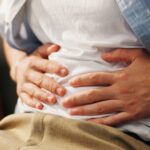

Constipation and bowel obstruction are different conditions. Constipation can, especially if severe, lead to a build of faeces that cause a blockage in the colon that cannot be passed without help. 1 Understanding the connection, recognising the warning signs of a true obstruction, and knowing when to seek emergency care can make a meaningful difference to your health.
Can constipation cause a bowel obstruction?
A blockage usually only happens with very severe constipation. It can develop when stool in the bowel dries out and hardens into a mass that’s too big and firm to pass — and only in severe cases does this go on to block the bowel. 2 When constipation becomes severe and stool accumulates into a large, hardened mass that cannot be expelled on its own, a condition called faecal impaction develops. 1 Faecal impaction is defined as a large mass of compacted faeces at any intestinal level that cannot be evacuated spontaneously. 1 When severe enough, this compacted mass can obstruct the colon — a serious, potentially life-threatening complication. 1,2
A hardened faecal mass (sometimes called a faecolith) lodged in the colon can cause a large bowel obstruction by physically blocking the passage of intestinal contents. 2 A systematic review of faecal impaction complications confirmed that faecal impaction can cause mechanical obstruction of the colon, compress adjacent structures, and — less commonly — lead to bowel perforation. 1 Stercoral perforation, in which sustained pressure from impacted stool causes pressure necrosis and perforation of the colon wall, with a mortality rate of up to 63% when complications arise. 3-5
People at increased risk for faecal impaction include older adults, those with neuropsychiatric conditions, and hospitalised or institutionalised patients. 1
How do I know if it is constipation or a bowel obstruction?
This is an important distinction to make — and one that sometimes requires medical evaluation to confirm. Constipation and bowel obstruction share some symptoms, but bowel obstruction can deteriorate quickly and is potentially life-threatening. 3-5
Constipation commonly causes infrequent bowel movements, hard or lumpy stools, straining, a sense of incomplete emptying, and mild-to-moderate abdominal discomfort. 6 These symptoms develop gradually and do not typically worsen rapidly.
A warning sign that suggests obstruction rather than ordinary constipation is vague abdominal pain and distension, especially when accompanied by vomiting and an inability to pass stool. 1, 3, 4
What are the serious complications of constipation?
For most people, constipation is an uncomfortable but manageable problem. However, when it is severe, prolonged, or left untreated, it can lead to serious complications 1 :
Faecal impaction. A common serious complication of severe constipation. A large, hardened mass of stool becomes lodged in the rectum or colon and cannot be passed without medical intervention. 1 Around half of all faecal impaction cases in one review occurred in people who already had chronic constipation. 1
Bowel obstruction. Severe faecal impaction can cause mechanical large bowel obstruction requiring urgent medical treatment. 2
Overflow (paradoxical) diarrhoea. Liquid stool leaks around a faecal impaction, causing what appears to be diarrhoea despite the underlying blockage. This is a recognised consequence of impaction, particularly in older adults. 1
Urinary complications. The proximity of a distended rectum to the bladder and urinary tract can cause urinary frequency, urinary retention, and — in severe cases — urethral obstruction. 1
Anorectal complications. Over time, repeated straining can weaken the pelvic floor and contribute to faecal incontinence. 6
Stercoral perforation. A rare but life-threatening complication in which sustained pressure from impacted stool causes the colon wall to necrose and perforate. Mortality rates reported to be 63% higher when severe complications arise. 3
What you can do
Constipation can often be managed with lifestyle changes — increasing dietary fibre, drinking adequate fluids (approximately 1.5 to 2 litres daily), and staying physically active. 6 Responding to the urge to defecate promptly, rather than suppressing it, also helps preserve normal bowel function. 7
If lifestyle changes don’t bring relief, your doctor or pharmacist can advise on further suitable options. Bear in mind that abdominal pain that comes on suddenly or worsens rapidly, particularly when combined with vomiting and an inability to pass stool, may be a sign of a bowel obstruction and require medical attention. 2, 3
Conclusion
Severe, untreated constipation can progress to faecal impaction and, in some cases, to bowel obstruction — a potentially life-threatening condition requiring urgent medical treatment. 1,2 If your constipation is persistent, severe, or accompanied by warning signs, do not delay seeking medical advice.
FAQ
Yes, but only when it becomes severe. Ordinary constipation does not cause bowel obstruction. However, when stool accumulates into a large, hardened mass that cannot be passed — a condition called faecal impaction — the mass can physically block the colon and cause a large bowel obstruction. 1,2 This is a serious complication requiring urgent medical treatment.
Yes. A hardened faecal mass (faecolith) lodged in the colon can cause mechanical large bowel obstruction, which is a potentially life-threatening condition. 2 People at increased risk for faecal impaction include older adults, those with neuropsychiatric conditions, and hospitalised or institutionalised patients. 1
Constipation involves infrequent, hard stools and mild-to-moderate discomfort. 6 A bowel obstruction may show up as severe abdominal pain that comes on suddenly or worsens rapidly, sometimes combined with vomiting and an inability to pass stool. A bowel obstruction is more serious and requires urgent medical attention. 2, 3
Yes. Although it is more common in older adults and people with neuropsychiatric conditions, faecal impaction can also develop in younger, otherwise healthy individuals with few traditional risk factors. 2 This is why persistent constipation should not be ignored, regardless of age — early attention to bowel habits, hydration, and diet can help prevent complications. 2
Serious complications of untreated or severe constipation include faecal impaction, large bowel obstruction, overflow diarrhoea (liquid stool leaking around an impaction), urinary retention, faecal incontinence from weakening of the pelvic floor, and — rarely — stercoral perforation of the colon wall, which carries a mortality rate of up to 63% when severe complications arise. 1, 3-5 Many of these complications can be prevented with timely, appropriate management of constipation.
This article was written with the assistance of generative AI technology and reviewed for accuracy.